
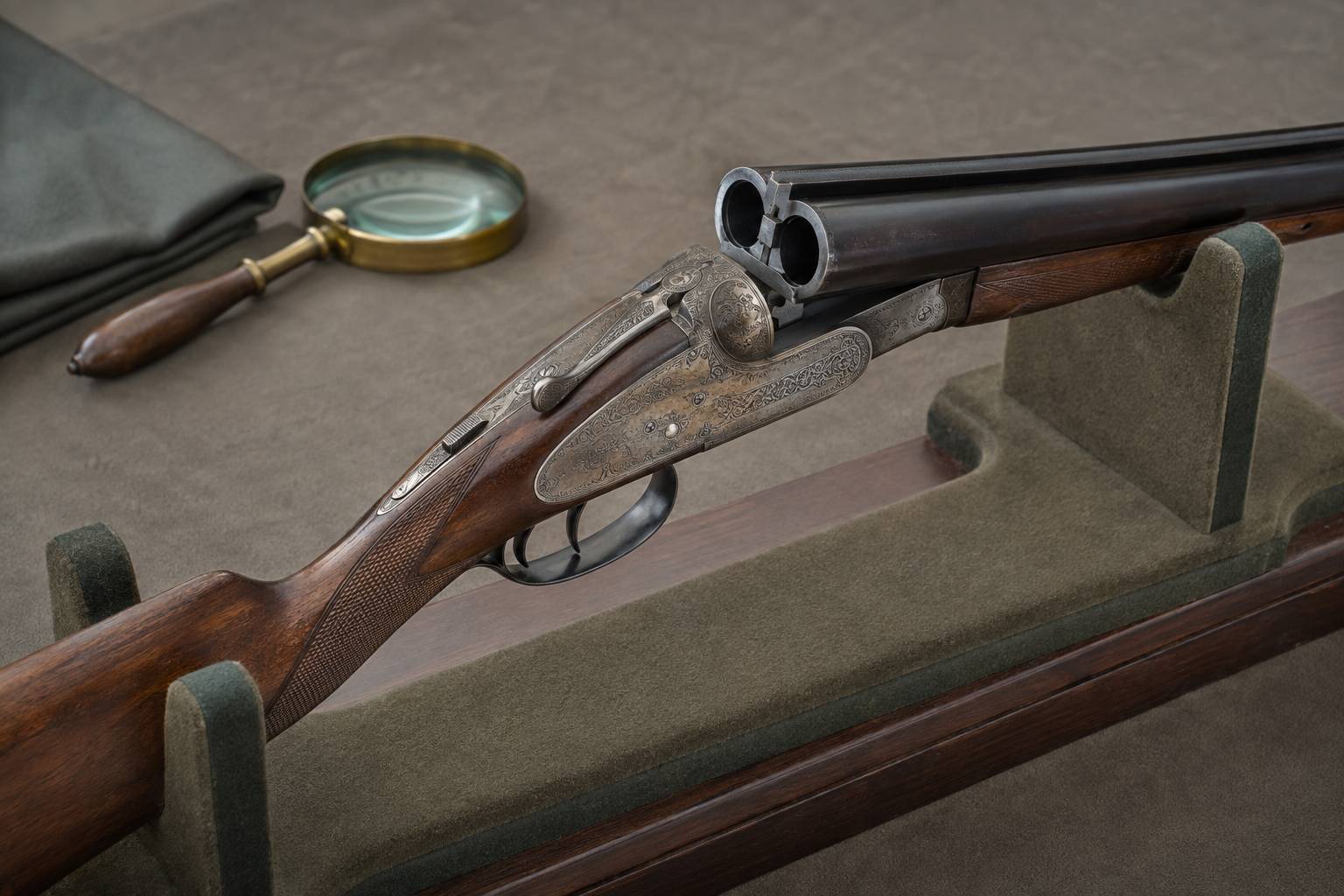
The overlooked preparation detail in examining a historical handgun is not a magnifier or reference book but a safe, controlled inspection environment. Treat the firearm as loaded until a qualified person verifies its condition, keep ammunition separate, and follow local requirements. Careless handling can harm people and evidence. A rushed inspection may damage a part, disturb residue or erase clues about the object's history.
For pre-lock handguns, the central question is not simply whether the mechanism works. It is how physical condition, documented history and remaining original material explain what the gun is.
The first failure chain: use becomes wear
Every operating handgun transfers force through its parts. Repeated cycling, impact, friction, heat and exposure leave marks on slides, frames, lockwork, grips, fasteners and finishes. These are not automatically defects. A contact mark in an expected location may support ordinary use; a damaged edge, distorted screw slot or uneven finish may indicate later intervention.
Describe condition rather than reducing it to a single label. Surface finish, bore condition, mechanical integrity, grips, markings and the relationship between adjacent parts tell different stories. A firearm may retain attractive finish while suffering internal wear, or show honest exterior use while preserving an unusually original configuration.
Safety comes before interpretation. A non-firing visual review can identify many clues, but questions about function, structural soundness or hidden damage belong with a qualified gunsmith familiar with the type. Do not attempt repairs, test firing or disassembly based only on photographs or general collecting advice.
Why condition is a chain, not a score
Wear is cumulative. A loose fastener may permit movement; movement can damage a mating surface, leading to further wear or an ill-fitting replacement. On older mechanisms, an alteration may also change how later parts fit. Condition therefore cannot be judged from one polished panel or attractive photograph.
Look for consistency across the object. Do finish patterns agree with edges and protected recesses? Do grip screws, pins and controls show similar handling? Are markings sharp where refinishing would normally soften them? Does the wear fit the stated history? These questions do not establish certainty, but they expose contradictions worth documenting.
Separate observation from conclusion. "Finish is thin along the forward edges" records a fact. "Original finish" is a stronger claim requiring evidence.
Provenance turns an object into a record
Provenance is the evidence connecting a firearm to its reported history. It may include dated photographs, factory or dealer documents, estate records, institutional references, correspondence, published collections or a traceable sequence of custodians. Each source has different weight; a story repeated for years is not the same as a record created at the time.
The informational failure chain is simple: a vague story becomes a repeated description, then is copied into a listing or catalogue. Later readers treat repetition as confirmation. Once the original source disappears, fact and tradition become difficult to separate.
Strong provenance is specific enough to test. Names, dates, locations, identifying marks and document history should align with the object. Not every historically meaningful handgun has a complete paper trail, but confidence should match the evidence. A documented gap is more useful than invented certainty.
Originality is about relationships between parts
Originality is often misunderstood as "untouched." Historical firearms have been cleaned, repaired and serviced throughout their working lives. A replacement spring or period-appropriate screw may be nearly invisible yet still change the configuration. A conspicuous modern addition may be easy to identify without telling the entire story.
Ask which components remain from the period and configuration being studied. Compare finish, markings, fasteners, grips, sights, controls and internal parts. Mismatched wear, disturbed edges, fresh tool marks and differences in color or texture may indicate separate phases of use or repair, though none is conclusive alone.
Originality also has a time dimension. A later alteration may be historically meaningful if it reflects service, sporting or institutional practice. Removing that evidence can make the object less informative, even when it appears cleaner.
When repairs preserve function but change meaning
A repair may restore safe operation while changing the material record. Refinishing can protect exposed metal but remove traces that help establish how the handgun was made, used or maintained. An added safety feature, sight or grip can improve utility while separating the object from its earlier configuration.
This is not an argument against necessary safety work. A firearm that may be unsafe should not be handled or fired merely to preserve originality. Stop use and obtain qualified professional assessment under applicable law and guidance. Rules governing possession, transfer, storage, transport and gunsmithing can change, so consult current official sources.
Distinguish functional from documentary condition. One concerns whether the mechanism can be safely assessed and operated; the other concerns how much original evidence remains. They overlap, but are not interchangeable.
A disciplined record prevents avoidable errors
Before making a historical claim, keep observations and sources together. Record:
– Safe-handling status and who performed any professional inspection.
– Markings, serial identifiers and configuration details transcribed exactly, without guessing at unclear characters.
– Condition notes divided into finish, mechanical, structural and accessory observations.
– Consistent photographs, with sensitive identifiers handled responsibly.
– The source, date and wording of each provenance claim.
– Known repairs, replacements, refinishing or modifications, identified as confirmed, reported or unknown.
This interrupts the process by which uncertainty becomes folklore and preserves context for future researchers without presenting an incomplete record as complete.
Reading the whole object
Condition, provenance and originality are separate lines of evidence, but their value increases when they agree. A documented repair should correspond to visible changes. A claimed period configuration should be supported by compatible parts and markings. A stated history should fit the pattern of use without unexplained exceptions.
When those lines conflict, the conflict is the finding. It may indicate replacement, restoration, mistaken identification, incomplete records or an unusual history. Narrow the claim, preserve the evidence and seek qualified technical or archival help where needed. For collectors and historians of pre-lock handguns, restraint is not a lack of knowledge; it is how surviving knowledge remains credible.